Mobile app development companies Virginia help businesses transform ideas into functional digital products, but one of the first questions companies ask is: how much does it cost to build a mobile app? Understanding mobile app development cost helps businesses plan their budgets, choose the right features, and make informed decisions before starting a project.
The total investment depends on several factors, including app complexity, design requirements, platform selection, features, and ongoing support. Businesses looking for mobile app development services in Virginia should evaluate the complete development process instead of focusing only on the initial price.
A well-planned mobile application can improve customer engagement, streamline operations, and create new opportunities for growth. This guide explains the factors that influence app development pricing and what businesses should consider before investing.
What Factors Affect Mobile App Development Cost?
There is no fixed price for building a mobile application because every project has different requirements. A simple business app and a large enterprise application require different levels of planning, design, and development.
The main factors that influence pricing include:
- App complexity
- Number of features
- Platform choice
- User interface design
- Backend requirements
- Security needs
- Testing requirements
- Maintenance and updates
Understanding these factors helps businesses create realistic expectations before beginning development.
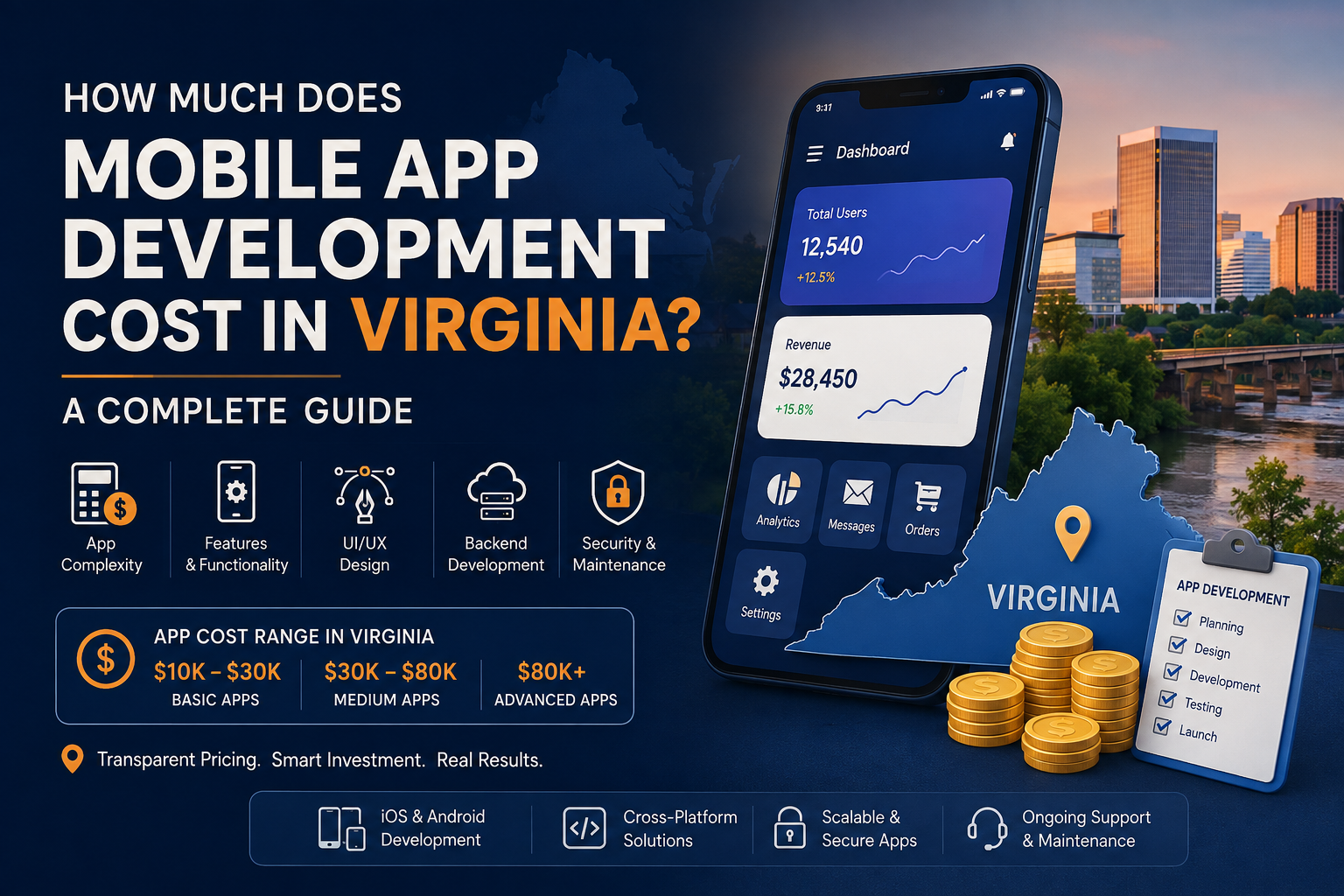
Average Cost of Mobile App Development in Virginia
The cost of building a mobile application can vary based on the size and purpose of the project.
While prices differ between projects, businesses generally fall into these categories:
Basic Mobile Apps
Estimated range: $10,000–$30,000
Basic apps usually include limited features and simple functionality.
Examples:
- Business information apps
- Appointment booking apps
- Simple customer portals
- Basic service apps
These applications are suitable for businesses that need a simple digital presence without advanced features.
Medium Complexity Mobile Apps
Estimated range: $30,000–$80,000
Medium-level apps require more planning and functionality.
They may include:
- User accounts
- Payment integration
- Push notifications
- Custom dashboards
- API connections
- Advanced user features
Many growing businesses choose this approach because it provides more flexibility and better user experiences.
Advanced Mobile Applications
Estimated range: $80,000+
Large-scale applications require extensive development resources.
Examples include:
- Enterprise applications
- Healthcare platforms
- Marketplace apps
- AI-powered applications
- Complex business management systems
These projects require detailed planning, stronger security, and continuous improvements.
Mobile App Development Cost Based on App Type
Different industries require different features, which directly affect the development budget.
Business Mobile Apps
Business applications usually focus on improving customer communication and internal processes.
Common features include:
- Customer accounts
- Contact forms
- Notifications
- Service information
- Scheduling tools
These apps are often more affordable because they focus on specific business needs.
E-commerce Mobile Apps
Shopping applications require more advanced features.
Common requirements include:
- Product catalogs
- Shopping carts
- Payment gateways
- Order tracking
- Customer accounts
Because of these additional features, e-commerce apps generally require a larger investment.
Healthcare Mobile Apps
Healthcare applications require strong security and privacy features.
They may include:
- Appointment scheduling
- Patient profiles
- Health tracking
- Secure communication
Businesses must prioritize data protection and user trust when developing healthcare solutions.
Key Features That Influence App Development Pricing
Features play a major role in determining the final project cost.
User Interface and Experience Design
A well-designed interface improves usability and customer satisfaction.
The design process includes:
- User research
- Wireframes
- Visual design
- Testing different layouts
Custom designs usually require more time compared to basic templates.
Backend Development
The backend manages the data and functionality behind the application.
It supports:
- User management
- Data storage
- Integrations
- App performance
Apps with complex backend systems require additional development work.
Third-Party Integrations
Many businesses connect apps with external platforms.
Examples include:
- Payment systems
- CRM software
- Maps
- Social media platforms
- Analytics tools
Each integration requires additional planning and testing.
Security Features
Security is essential for applications that handle customer information.
Important security elements include:
- User authentication
- Data protection
- Secure connections
- Access controls
Businesses should consider security from the beginning rather than adding it later.
Native vs Cross-Platform App Development: How It Impacts Cost
Businesses often choose between native and cross-platform development.
Native App Development
Native apps are built specifically for one operating system, such as Android or iOS.
Advantages:
- Strong performance
- Better platform optimization
- Access to device features
However, creating separate apps for multiple platforms may increase development costs.
Cross-Platform App Development
Cross-platform apps allow businesses to build applications that work across multiple devices using a shared development approach.
Advantages:
- Faster development
- Lower initial cost
- Easier maintenance
The right choice depends on business goals, target users, and required functionality.
Additional Costs Businesses Should Consider
Many companies focus only on the initial build cost and forget about ongoing expenses.
A complete mobile app budget should consider:
App Maintenance
Regular updates keep applications secure and functional.
Maintenance may include:
- Bug fixes
- Security updates
- Performance improvements
- New feature additions
Hosting and Backend Costs
Applications that store user data require reliable hosting solutions.
Costs depend on:
- User traffic
- Storage needs
- Server requirements
App Store Updates
Publishing and maintaining apps on platforms like Google Play and Apple App Store may require ongoing management.
How to Reduce Mobile App Development Expenses
Businesses can control costs with proper planning.
Start With a Minimum Viable Product (MVP)
An MVP includes essential features needed to test the idea.
Benefits:
- Lower initial investment
- Faster launch
- Real user feedback
Businesses can add advanced features after understanding customer needs.
Prioritize Important Features
Not every feature needs to launch immediately.
Focus on:
- Customer needs
- Business goals
- Core functionality
Additional features can be introduced later.
Choose the Right Development Partner
The cheapest option is not always the best choice.
A reliable development team helps businesses avoid:
- Poor-quality code
- Delayed launches
- Expensive fixes
- Security issues
How Businesses Should Evaluate App Development Companies in Virginia
Choosing the right partner requires more than comparing prices.
Consider:
Portfolio and Experience
Review previous projects to understand the company’s expertise.
Technical Knowledge
A strong development partner should understand:
- Mobile platforms
- User experience
- Security
- Modern technologies
Communication Process
Clear communication helps keep projects organized and aligned with business goals.
Post-Launch Support
A successful app requires updates and improvements after launch.
Why Investing in a Quality Mobile App Matters
A mobile application is not just a technology project. It is a tool that helps businesses connect with customers, improve services, and create better digital experiences.
A well-developed app can help businesses:
- Increase customer engagement
- Improve accessibility
- Automate processes
- Strengthen brand presence
- Generate new opportunities
American Digital Agency focuses on creating digital solutions that align with business goals, user expectations, and long-term growth strategies.
Final Thoughts
The mobile app development cost in Virginia depends on many factors, including features, design, technology choices, and project complexity. Businesses should focus on building an application that delivers real value rather than choosing the lowest-priced option.
By understanding the development process, planning features carefully, and selecting the right technology approach, companies can create mobile applications that support long-term success.
Whether you are building a simple business app or a complex digital platform, a clear strategy is the foundation of a successful mobile application.
Frequently Asked Questions
How much does it cost to develop a mobile app in Virginia?
The cost depends on the app type, features, design requirements, and development complexity. Basic apps may cost less, while advanced business applications require a larger investment.
How long does it take to build a mobile app?
Development timelines vary based on project requirements. Simple apps may take a few months, while complex applications can require more time for design, development, and testing.
Should a business build an Android app, iOS app, or both?
The right choice depends on your target audience, business goals, and budget. Many businesses choose multiple platforms to reach more users.
What features increase mobile app development costs?
Features such as payment systems, AI tools, custom designs, integrations, real-time communication, and advanced security can increase development requirements.
How can businesses reduce mobile app development expenses?
Businesses can reduce costs by starting with an MVP, prioritizing essential features, planning carefully, and working with an experienced development partner.