Mobile App Development Company in Virginia
Virginia has no shortage of businesses with app ideas that never quite made it past the pitch deck. Usually, it’s not the idea that fails. It’s the team behind it, or the lack of one. As a Mobile App Development Company in Virginia, we build custom mobile apps for businesses that are serious about shipping something real—something users actually open, use, and come back to.



Mobile App Development Company in Virginia — Mobile App Development Company in Virginia

Mobile App Development Company in Virginia
Mobile App Development Company in Virginia

Apps Designed Around Your Users, Not Around Our Process
Before any design or development work begins, we sit with your business. We look at who your users are, what they need, where they get stuck, and what would make them stay. That picture shapes everything that follows, including architecture, features, interface, platform choice. When you partner with a mobile app development company in Virginia that actually starts here, the product you get at the end reflects the people using it, not just the requirements document.
Mobile App Development Agency in Virginia Built Around Real Outcomes
There's always a good reason why customers keep choosing the same Mobile App Development Agency in Virginia.

Planning That Earns the Build Phase
The planning phase is where most agencies rush. We don't. Features get prioritized, architecture gets decided, user flows get mapped, and nothing moves to development until the foundation is solid. Skipping this part costs three times as much to fix later.

Built From Scratch, Every Time
We write code specific to your product. No recycled templates with your branding layered on top. If that sounds like a small distinction, it isn't. Template-based development creates ceilings your product hits six months after launch. Custom code gives you a product that can grow with the business.

iOS, Android, Cross-Platform -- Wherever Your Users Are
We build for the platform your users are actually on. Sometimes that's iOS. Sometimes Android. Often both. The platform recommendation comes from user data and business context, not from whatever's easiest on our end.

Connects to What You Already Use
A great app that can't talk to your existing systems is a headache, not a solution. We build with integration in mind from day one -- your CRM, payment tools, inventory software, internal dashboards. The app fits the way your business already runs.

Tested Like Real Users Will Use It
Real users don't behave like QA scripts assume they will. They tap things out of order, use older devices, drop in and out of connectivity. Our testing accounts for that. The problems get caught before launch, not after a one-star review explains them.

We're Here When Something Needs Fixing
When something breaks or needs updating after launch, you reach the same team that built the thing. Not a help desk. Not a ticketing system managed by someone who has never seen your codebase. The people who know the product handle what comes up.
Mobile Application Development Virginia Businesses Rely On
Businesses may find the same mob app development services in Virginia. The difference lies in the quality of those services in which American Digital Agency is unparalleled.
- Discovery & Planning
- UI/UX Design
- App Development
- Quality Assurance
- Launch & Deploy
- Maintenance
Discovery and Planning
We dig into your business before we open a design tool. User journeys get mapped, features get ranked by actual value rather than excitement, and the technical architecture gets decided based on where the product needs to go -- not just where it starts. Businesses that skip this phase always regret it. Ours never have to.
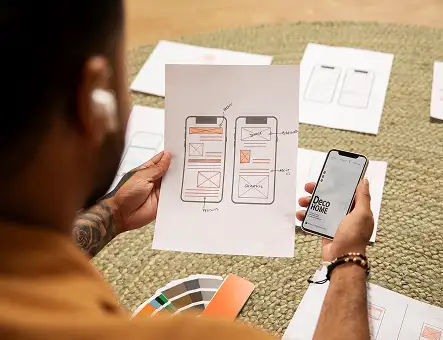
UI/UX Design
A beautiful app that's confusing to use isn't actually a good app. We design for the experience your users will have, not the screenshot your stakeholders will approve. Navigation needs to feel obvious. Interactions need to feel right. That takes more than a talented designer -- it takes someone who has watched real people use real apps and understands why some work and others don't.
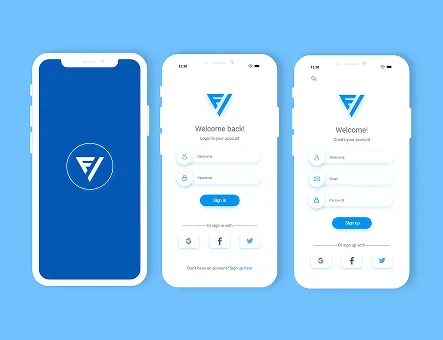
App Development
Clean code, documented properly, built so the next developer who touches it isn't starting from a mystery. Our mobile application development Virginia work is built to production standards from the start -- not cleaned up at the end when someone remembers the project needs to last longer than the launch sprint.
Quality Assurance
We test across devices, OS versions, network conditions, and use cases that don't show up in a checklist. The goal is simple: your users should never encounter a bug that we could have found first. We take that seriously.
Launch and Deployment
App store submissions, deployment configurations, launch coordination -- handled by us. The technical side of getting your app live is managed by the people who built it, so nothing gets lost in translation between teams.

Maintenance and Updates
Apple and Google push updates that break things. User behavior evolves. Features that made sense at launch sometimes need rethinking. Our ongoing mobile app development company in Virginia support covers all of it -- compatibility patches, performance improvements, new features, whatever the product needs to keep earning its place on your users' phones.

Build the App Your Business Actually Needs
FAQ'S
Straightforward, well-scoped apps typically run three to five months from discovery to launch. More complex products take longer. After the discovery phase, you'll have a timeline that reflects the actual scope, not a number picked to win the project.
Get in touch through the contact page or start a live chat. Tell us about the idea, who it's for, and what the core features look like. We'll come back with an honest scope and estimate based on what you've described.
Healthcare, logistics, retail, finance, education, hospitality, really any industry where your team or your customers need a tool that existing software doesn't cover well. If off-the-shelf isn't solving the problem, custom development usually is.
We do. OS updates, bug fixes, performance monitoring, feature additions -- the product gets maintained after launch. You don't need a new team every time something needs to change.
Native apps are built for one platform using its own tools and language. Cross-platform apps share a codebase across iOS and Android. Native usually wins on performance for complex products. Cross-platform makes sense when reaching both audiences quickly and efficiently is the priority.