Every business owner hits this fork eventually. You’ve got a marketing budget and one nagging question: pour it into SEO, or hand it to a pay per click marketing company and start buying clicks today? Both drop you in front of people searching for exactly what you sell. But they work in completely opposite ways, cost wildly different amounts, and pay off on totally different timelines. Pick wrong and you either sit around for months waiting on traffic you needed yesterday, or torch cash on ads you never really needed. So before a single dollar leaves your account, let’s break down what actually separates the two.
The Real Difference Between SEO and Google Ads
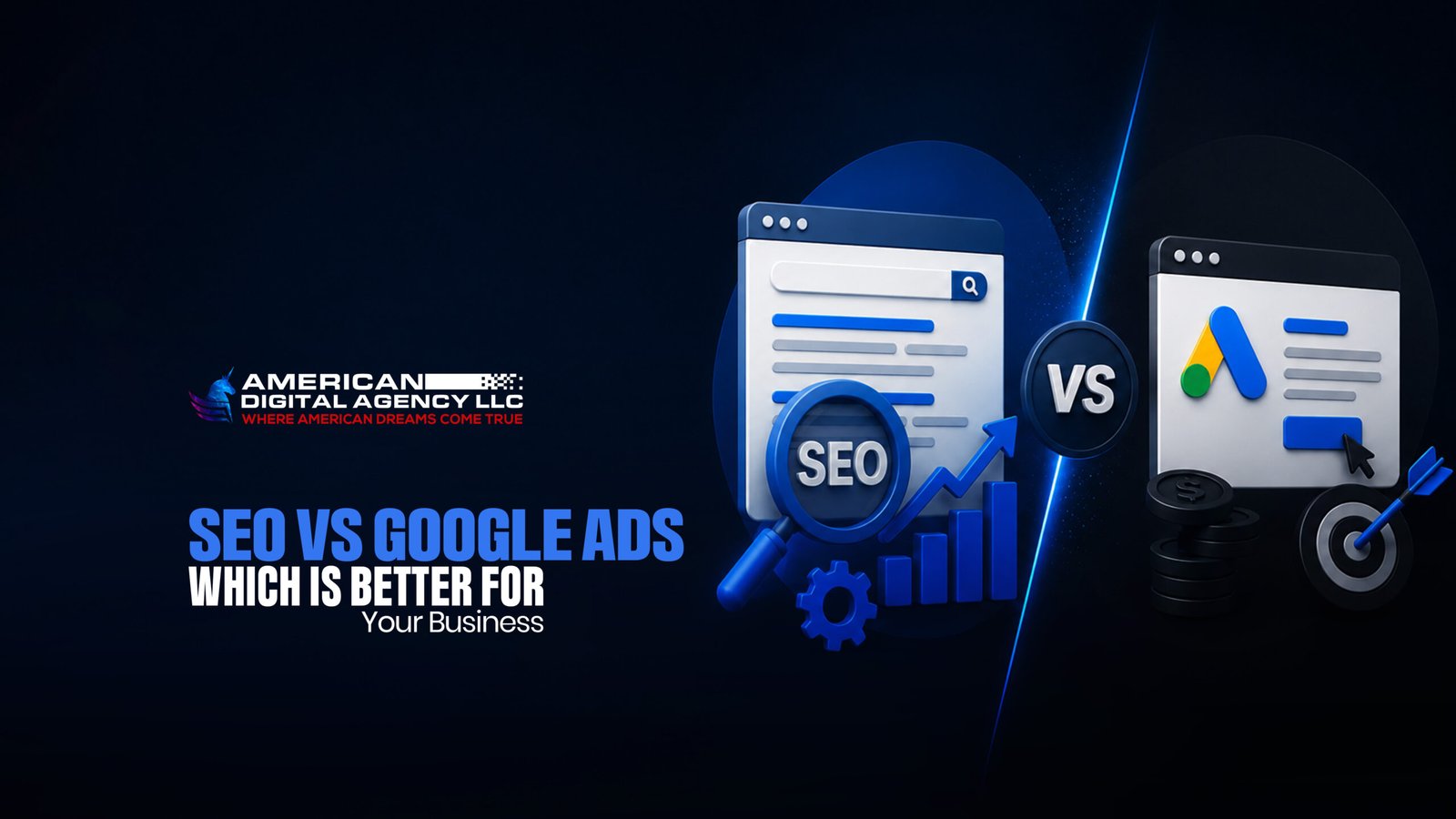
Strip away the acronyms and the difference between seo and google ads is dead simple. SEO earns your spot in the organic results, the ones with no “Sponsored” tag, and you pay nothing per click. Google Ads buys your spot at the very top of the page, and you pay every single time somebody taps it. One is a house you build and own. The other is a hotel room you rent by the night. Both put a roof over your head tonight. Only one still belongs to you in five years. Get that basic split straight and every budget decision after it gets easier.
Simplest test: kill the spend. If your traffic vanishes overnight, that was ads. If it keeps rolling in, that was SEO.
SEO vs Google Ads: What Works Faster?
No contest on this one. Ask SEO vs Google Ads: what works faster, and ads win in a landslide. You can launch a campaign this morning and have qualified leads clicking through by lunch. SEO plays the long game. Most sites need three to six months of steady work before organic rankings really budge, sometimes longer in a crowded industry. So if you’re opening next week and need bookings now, ads are your best friend. If you’re building something meant to still be pulling traffic in 2028, SEO is where the patient money goes. Speed and staying power almost never live in the same channel.
The Benefits of SEO for Businesses
The benefits of SEO for businesses pile up slowly, then all at once. A few that actually move the needle:
- It compounds. Every solid page keeps earning clicks for years with no per-visit fee. Some studies peg long-term SEO return as high as twelve dollars back for every dollar you put in.
- It builds trust. People skip the ads and click the organic results because those read as earned rather than bought.
- It never clocks out. Rankings work nights, weekends, and holidays with no credit card attached.
- It drags down your blended cost per lead over time as the free traffic keeps growing.
The catch, and it’s a real one, is patience. SEO won’t rescue your numbers this quarter. It quietly rewards the businesses stubborn enough to stick around.
Think of SEO like a retirement account. Boring early, glorious later, as long as you don’t keep yanking money out.
The Benefits of Google Ads
Now flip to the other side. The benefits of Google Ads are all about speed and control, which is its own kind of powerful. You get instant visibility at the top of page one the moment your campaign flips on. You can target with almost surgical precision (exact keywords, specific cities, times of day, even the device someone’s holding). And the data lands immediately, so within days you know which message converts instead of guessing for months. That feedback loop is pure gold, even for businesses that lean mostly organic. Plenty of smart owners run ads purely to learn which keywords actually convert, then pour those lessons straight into their SEO.
What Pay Per Click Advertising Actually Costs
Let’s talk real numbers, because this is where people get spooked. Pay per click advertising charges you per click, and in 2026 the cross-industry average on Google Search sits somewhere around three to five dollars. But averages lie. A click on an e-commerce keyword might run a buck, while “personal injury lawyer” can sail past forty. Most small businesses spend roughly one to three thousand dollars a month just to gather enough data to optimize properly. And CPCs have crept up about twelve percent in the past year, partly because AI Overviews are squeezing organic space and elbowing more advertisers into the paid auction. Budget with your eyes open, and never launch a campaign without tracking which clicks turn into actual customers.
Golden rule of PPC: if you can’t measure what a click is worth to you, you’re not advertising, you’re donating.
So, Which One Should You Actually Choose?
Here’s the honest answer nobody selling a single service wants to say out loud: it’s rarely either-or. Need cash flow this month? Start with Google Ads. Building a brand meant to outlast your ad budget? Invest in SEO. The businesses that genuinely win tend to run both, using ads for the quick wins while SEO compounds quietly underneath, and the two even feed each other with shared keyword data. That’s exactly the blend we map out for clients at American Digital Agency before anyone commits to a lane. The wrong move isn’t picking ads or picking SEO. It’s picking neither and hoping customers wander in on their own.
FAQs
Do Google Ads help with SEO?
Not directly. Ads won’t lift your organic rankings. But they hand you fast keyword and conversion data you can feed right into your SEO, which helps a lot.
Do I invest in SEO or PPC?
Depends on your timeline. Need leads now, lean PPC. Building long-term traffic on a budget, lean SEO. Most growing businesses end up running both.
Which generates better ROI, SEO or Google Ads?
Over time, SEO usually wins because it compounds and carries no per-click fee. Ads pay off faster but reset the moment you stop spending. SEO versus paid really comes down to short-term speed against long-term value.
Can SEO and Google Ads work together?
Absolutely. Ads cover you while SEO builds, you own more of the page by ranking and advertising at once, and shared data sharpens both channels.
Should I invest in SEO or Google Ads?
Need immediate traffic, start with Google Ads. Can wait a few months for cheaper, lasting results, start with SEO. Ideally you phase in both.