Wrong question, most of the time.
The better one is smaller. What does the site need to do next year, and who is going to keep it running when something breaks?
A florist and a fintech startup both need a website. Not the same one. Not even close. And the gap between choosing right and choosing wrong gets measured in thousands of dollars and a pile of wasted weekends.
Anybody shopping for web development services hits the same fork. Grab a builder, or pay to build. Both are fine. Both are also wrong, depending. Here is how to tell which side a business lands on.
No single answer fits everyone. That is the honest starting point most sales pitches skip right over.
Website Development, Stripped of the Jargon
Website development means two very different things wearing one name.
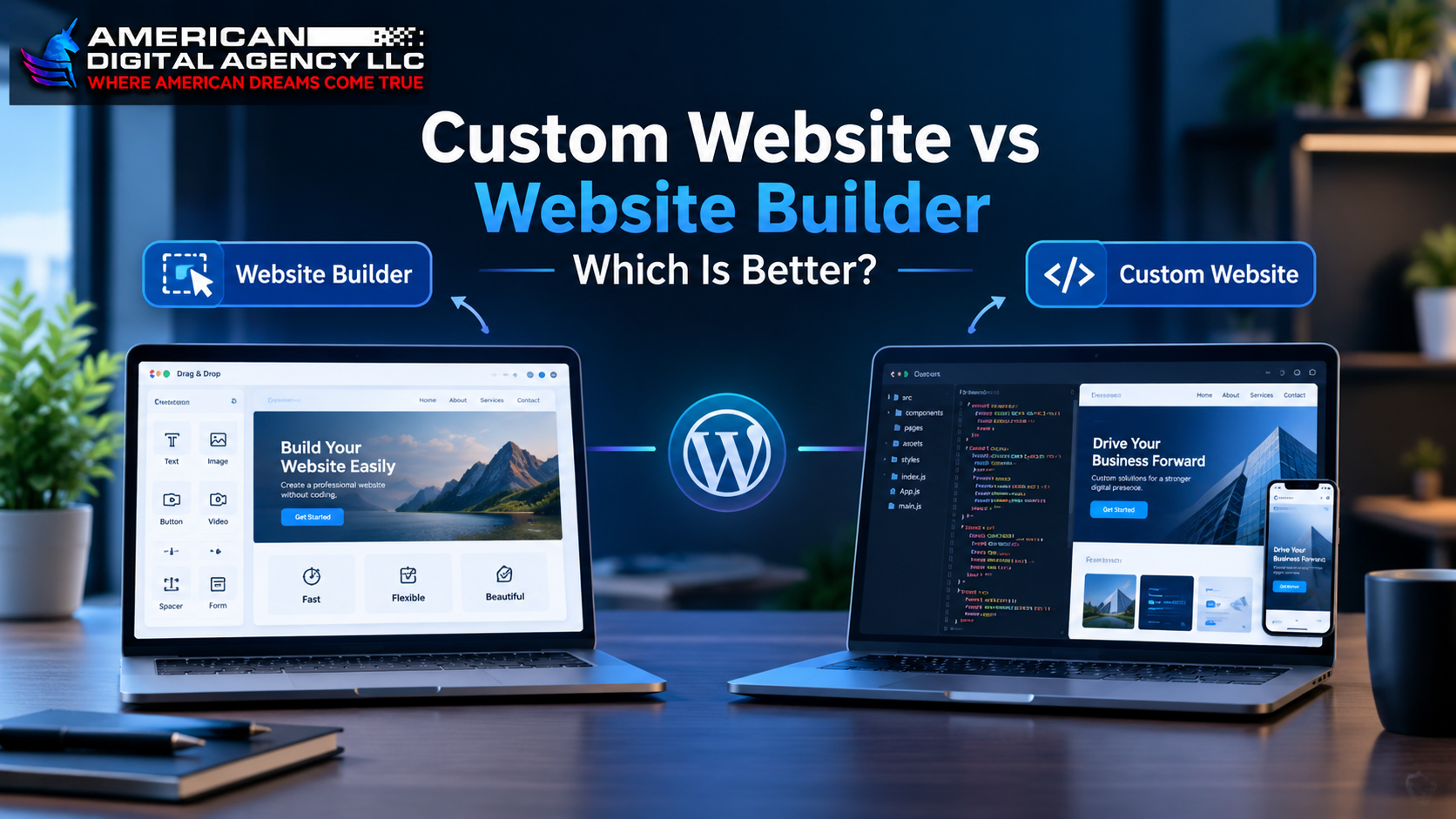
One is a builder. Wix. Squarespace. Shopify for shops. Drag a block, drop in a photo, go live by Saturday. Cheap. Fast. Boxed in.
The other is custom. A developer writes the thing from close to scratch, shaping it around a single business instead of a template built for a million businesses at once. Slower. Pricier. Bends to fit.
That is the whole spectrum. Everything else sits at some point along it.
Builders win on speed. Custom wins on control. WordPress splits the difference and hands over a maintenance schedule.
Nobody tells beginners that last part. It matters more than the price tag.
Quick pointer: cheaper up front rarely means cheaper across three years. Ask about year two, not launch day.
Signs a Business Actually Needs Custom Website Development
Custom website development is not a flex. It is a fix for particular problems. Skip it until at least one of these is clearly true:
- The site has to run something a template chokes on. Live inventory wired to bookings. A members area with strange rules. A checkout hooked into back-office software.
- Traffic is heavy, and a bloated template has started loading slowly enough to lose real sales.
- The brand needs to look and behave in a way no off-the-shelf theme can fake.
- Growth is fast, and the current site keeps smacking into walls every few months.
None of that applies? A builder is almost certainly the smarter money.
Most small businesses tick zero of those boxes. That is not an insult. It is a budget saved.
Worth knowing: a slow site is not a cosmetic issue. Even one extra second of load time measurably drops conversions.
Another pointer: outgrowing a builder is a good problem. It means the business got bigger. Switching later is normal, not a failure.
WordPress vs Custom Website, the Middle Ground Nobody Explains
Most sites are not builder or fully custom. Most sites are WordPress, parked right in between.
So here is the wordpress vs custom website question, answered plainly.
Cheaper than custom? Yes. A lot cheaper.
More flexible than a builder? By miles.
Harder to run than a builder? Also yes. That part is the price of the flexibility.
The catch? Upkeep. Plugins break. Updates start fighting each other. Security holes crack open the second nobody is watching.
A cared-for WordPress site is excellent. A forgotten one quietly rots.
That is the actual trade. It has almost nothing to do with which platform is technically superior, and almost everything to do with whether anybody is minding it.
Quick pointer: pick WordPress only if a real person will maintain it. Otherwise the savings turn into a repair bill down the line.
What a Normal Business Website Really Costs to Get Right
A story that repeats constantly.
A dentist wants a fresh business website. A sales rep quotes eighteen thousand dollars for a custom build, stuffed with words like scalable and bespoke. It sounds serious. It sounds safe.
What the dentist actually needed: a fast five-page site, a booking button, and solid local search. Honest cost? Somewhere near three thousand.
Worth knowing: fancy vocabulary on a quote is not the same as value. Scalable and bespoke are words, not features.
American Digital Agency has waved clients off that exact overspend more than once, because a simple option quietly delivered everything the fancy quote promised. Custom is the right call later. Once a business gets big, strange, or fast enough that a template starts fighting back. Not a single day sooner.
Quick pointer: match the site to the need, never to the ego. Empty custom sites are just expensive trophies.
So. Better?
Builder for most. Custom for the outliers. WordPress for the crowd in the middle that is willing to do the maintenance.
The costly mistake is not picking the cheaper option. It is buying far more website than the business will ever actually use.
Start small when small works. Scale up when the walls appear. That order saves money almost every time, and it keeps the site matched to the business instead of a sales target.
Frequently Asked Questions
Is a custom website worth the money?
Only with complex features, heavy traffic, or unusual needs. For a straightforward site, a builder handles the job at a fraction of the cost.
Is WordPress better than a website builder?
More flexible, yes, but it needs real maintenance. Builders fit hands-off owners, while WordPress rewards anyone willing to manage updates and plugins.
How much should a small business website cost?
Builders run a few hundred dollars a year. Custom builds start in the low thousands and climb with complexity, so the budget should follow the real requirements.
How long does building a website take?
A builder site can launch in days. A custom build usually runs several weeks to a few months, depending on features and how ready the content is.