Every founder who has ever had an app project go sideways tells the exact same story. The sales call was electric. The mockup looked like a billion-dollar startup. Then three months later, deadlines started slipping, the people writing the code turned out to be unreachable, and the “finished” build crashed the first time ten real users logged in at once.
Hiring a mobile app development company in the USA is one of the highest-stakes decisions a growing business makes. Pick the right engineering partner, and you launch a product that users open every day. Pick the wrong one, and you end up paying twice once to build it, and a second time to untangle the mess.
Before you sign a scope of work or wire a deposit, run every shortlisted agency through this real-world vetting framework.
1. Separate Real Builders From Polished Sales Teams
Many agencies win contracts on the strength of a charismatic account executive, then quietly hand your project off to an unvetted junior pool once the ink dries.
During your discovery call, ask to speak directly with the technical lead or solutions architect who will actually oversee your build. Notice how they answer questions about your product:
- Green Flag: They challenge weak assumptions, ask tough questions about edge cases, and suggest ways to simplify version one.
- Red Flag: They say “yes” to every feature on your wishlist without asking how your backend, APIs, or user roles will handle the load.
2. Demand Platform Depth—Not Just “We Do Everything”
Apple and Google users expect completely different navigation patterns, gesture behaviors, and performance standards. An agency that treats mobile development as a one-size-fits-all exercise usually ships apps that feel clunky on both stores.
Check whether their engineers have deep, verifiable experience across both ecosystems:
- For Apple devices, look for proven expertise in native iOS app development using Swift and Apple’s Human Interface Guidelines.
- For Google’s fragmented hardware market, verify that their Android app development team builds in Kotlin and tests on mid-range physical devices not just a single flagship emulator.
- If you are weighing React Native or Flutter to launch faster across both stores, make sure they explain the trade-offs of native vs. cross-platform app development honestly rather than pushing whichever framework is easiest for them.
3. Look at User Retention, Not Just Pretty Screenshots
Dribbble-style mockups win pitches, but intuitive flows keep users from deleting your app after thirty seconds. Ask prospective partners to walk you through a live app they designed from scratch—not a static image gallery.
Pay close attention to their mobile app UI/UX design process. Strong teams build clickable wireframes and test them with real users before writing production code, because fixing a confusing onboarding screen during prototyping takes hours instead of weeks.
4. Five Tough Questions to Ask Before You Sign Anything
Skip generic questions about company history and put these five prompts on the table during your final agency interviews:
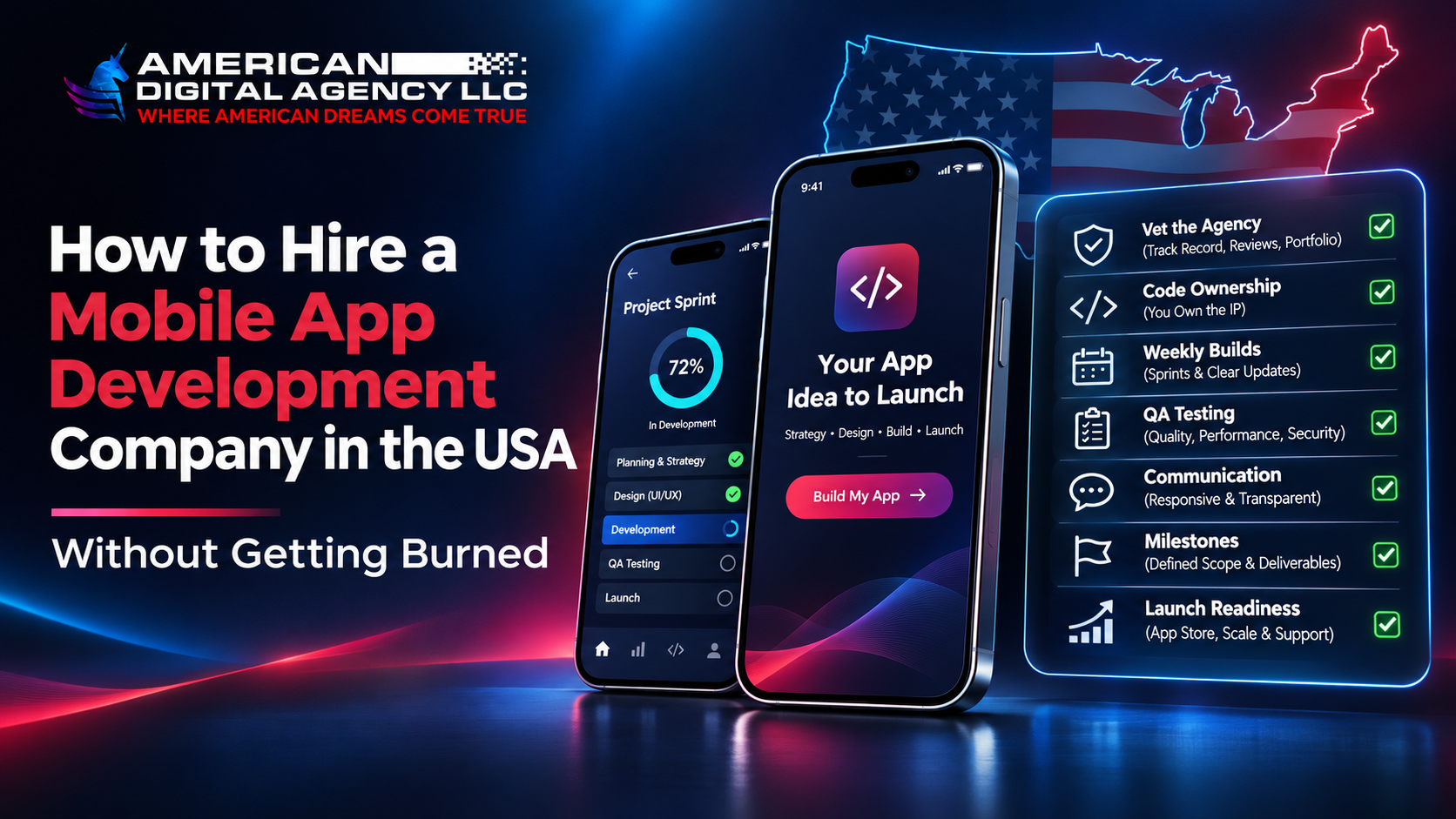
- “Who owns the Git repository, cloud accounts, and source code from day one?” The only acceptable answer is you. Your code should live in repositories your business controls throughout the build not held behind an agency firewall until final sign-off.
- “How often will we see working builds on a real phone?” You should test live sprint releases every one to two weeks via TestFlight or Google Play internal tracks, never wait months for a “big reveal.”
- “What happens when Apple or Google rejects a build during store review?” App Store and Play Store submissions involve strict privacy, payment, and compliance rules. Make sure full submission management is baked into the scope.
- “Who handles bugs and OS updates after launch day?” iOS and Android release major updates every year. Verify what post-launch warranty and ongoing maintenance look like once real customers start using the app.
- “Can I speak with two founders whose apps you launched in the last twelve months?” Past clients will tell you within five minutes whether the agency communicates honestly when timelines hit friction.
5. Watch Out for These Three Deal-Breaking Red Flags
Walk away immediately if you spot any of these warning signs during negotiations:
- Vague Scope Documents: A one-page proposal with bullet points like “Build user profile and admin panel” guarantees scope disputes later. Demand user stories, milestone deliverables, and clear acceptance criteria upfront.
- Zero Real-Device QA: Testing strictly on desktop simulators misses battery drain, slow cellular handoffs, push-notification delays, and screen-scaling bugs.
- Lock-In Proprietary Frameworks: If an agency builds your app on an internal, undocumented toolset that no outside engineer can maintain, you never truly own your product.
Build With a USA Team That Treats Your Product Like Its Own
A great app is never built on blind trust—it is built on clear milestones, direct access to engineers, and honest communication from the first wireframe to App Store approval.
At American Digital Agency, our Ashburn, Virginia and New York teams partner with founders and enterprises nationwide to design, engineer, and launch high-performing iOS, Android, and cross-platform applications with 100% client code ownership. Ready to validate your idea with a senior product architect? Schedule a technical scoping call and get a clear, no-fluff roadmap for your build.
Frequently Asked Questions (FAQs)
Should I hire a local USA app development agency or an offshore freelancer?
A USA-based agency gives you overlapping business hours, direct legal and IP protection, clearer product communication, and engineers who understand American consumer expectations reducing costly rework.
How do I protect my app idea before sharing details with an agency?
Always request a mutual Non-Disclosure Agreement (NDA) before your discovery call. Reputable agencies sign NDAs as standard practice prior to reviewing sensitive product workflows.
What should be included in a mobile app scope of work?
A solid scope document outlines user roles, core features, third-party integrations, UI/UX deliverables, milestone timelines, QA testing standards, App Store/Play Store submission, and post-launch support.
How can I verify if an agency actually built the apps in its portfolio?
Ask for live App Store and Google Play links, check the developer credits on the store listings, and request a live walkthrough of the backend architecture or client references.
When should an app start with an MVP instead of full-scale development?
Whenever you are launching a new product or testing market demand. A Minimum Viable Product focuses on solving one core user problem cleanly so you can launch faster and improve using real user data.